
Sahdev Yadav, President of the Indian Weightlifting Federation, has been unanimously elected as the head of the South Asian Weightlifting Federation (SAWF). He aims to strengthen cooperation and improve weightlifting standards in the region.

India on Monday strongly advocated the establishment of "South Asian Union" as it sought to enhance the bilateral trade - with Pakistan - which had the potential to touch $6 billion.
Pakistan's support for the proposal of establishing the main campus of SAF would be conditional till all issues pertaining to free movement of students, teachers, visiting professors and faculty members are resolved.
Britain's business ambassador and leading non-resident Indian Lord Swraj Paul has said South Asia should move towards a single currency to unleash the region's potential and accelerate economic growth.

Sabka sath, sabka vikas, said Maldives President abdulla Yameen.
Pakistan has said disputes, which are holding back regional cooperation must be resolved and the South Asian Association For Regional Cooperation should help create amity, understanding and cooperation on the basis of "enlightened self-interest of the peoples" of South Asia.
The proposed South Asia Free Trade Agreement, which will come into effect according to the timetable set out at the SAARC summit in Islamabad, will greatly benefit the region, diplomats from the member countries said in Washington.
Reviewing the progress achieved by South Asian Association for Regional Cooperation, leaders of the grouping have advocated greater cooperation among the members.

Chinese President Xi Jinping is in New Delhi for the 18th BRICS Summit, where he is scheduled to hold bilateral talks with Prime Minister Narendra Modi. This visit, his first to India in nearly seven years, comes amidst efforts to normalise India-China relations following the 2020 Eastern Ladakh standoff and is expected to have significant implications for bilateral ties and BRICS cooperation.

Postponed several times due to a variety of reasons, the much-delayed but the biggest South Asian Games ever begin, in Guwahati, on Friday, with hosts India expected to stamp their superiority in the regional spectacle.

Vikram Doraiswami, a seasoned diplomat, has been appointed as India's new ambassador to China, succeeding Pradeep Kumar Rawat. This decision comes as both countries attempt to improve bilateral relations following a period of strain.

UEFA's member associations have unanimously voted to boycott the World Cup and other FIFA competitions in protest against FIFA's plan to sell stakes to external investors in a subsidiary managing its tournaments.

According to sources, India would be invited to the new proposed forum, while countries like Sri Lanka, Maldives, and Afghanistan are expected to be part of the grouping.
He emphasised the need for fully opening up the state to the fast economic activities shaping up in the region so that the people of the state could also reap the benefits of economic liberalisation, it said.

Prime Minister Narendra Modi and Indonesian President Prabowo Subianto have significantly advanced the India-Indonesia Comprehensive Strategic Partnership, securing crucial agreements on defence, critical minerals, and maritime security, including BrahMos missile supply and Sabang port development.

The broader conflict in West Asia, the largest international market for Indian carriers, has forced a sharp reduction in daily flights relative to the summer schedule.
Recognising the "serious threat" posed by terrorism to the peace and stability of South Asia, the 15th South Asian Association for Regional Cooperation Summit on Sunday in a declaration supported "strongest possible cooperation" against the menace and signed a key agreement in this regard.
Although Afghanistan will be formally inducted as the eighth member of SAARC on Tuesday, Afghan Foreign Minister Dr Rangin Dadfar Spanta also attended the meet.

'So far our production is not affected. But every day the situation prolongs, it does bring risks in terms of shipments getting delayed.'
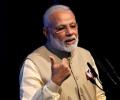
He said the SAARC leadership can discuss via video conferencing ways to keep their citizens healthy.
"Building Bridges" was the theme of the recently concluded South Asian Association for Regional Cooperation, or Saarc, summit in Addu (Maldives).

The challenge before us is to translate institutions into activities, conventions into programmes, official statements into popular sentiments. Declarations at summits and official level meetings do not amount to regional cooperation or integration. Regional cooperation should enable freer movement of people, of goods, of services and of ideas. It should help us re-discover our shared heritage and build our common future.
Prime Minister Manmohan Singh and his Pakistani counterpart Yousuf Raza Gilani are expected to meet in Thimphu on the margins of the South Asian Association Regional Cooperation Summit, during which the Indian leader is likely to seek an update on the probe and trial in the 26/11 Mumbai terror attacks case being conducted in Pakistan.

BNP chairman Tarique Rahman called for maintaining law and order and sought cooperation in building a safe and humane Bangladesh after his party's victory in parliamentary elections.
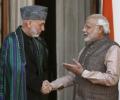
In his first bilateral meeting with international leaders after assuming charge, Prime Minister Narendra Modi on Tuesday held talks with Afghanistan President Hamid Karzai.
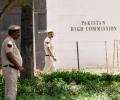
Pakistan is holding a high-level security meeting to formulate a response to India's suspension of the Indus Water Treaty and downgrading of diplomatic ties. The meeting, convened by Prime Minister Shehbaz Sharif, will include the National Security Committee, three services chiefs, and key ministers. The move comes after India blamed Pakistan for a terror attack in Pahalgam, which Pakistan has denied. Diplomatic observers warn that the escalation could further strain relations between the two countries.
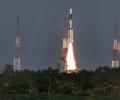
The satellite will enable a full range of services to neighbours including the areas of telecommunication, television, direct-to-home, VSATs, tele-education and tele-medicine.
Faced with high energy costs hitting economies of the region, leaders of Association of South East Asian Nations and their dialogue partners on Monday agreed to strengthen regional cooperation on energy security
India has lodged a strong protest with Bangladesh over a now-deleted social media post by a key aide of Bangladesh's interim government that claimed certain areas of Indian territory should be part of that country. The post, which included a map showing parts of West Bengal, Tripura, and Assam as belonging to Bangladesh, was made by Mahfuz Alam, a de facto minister in the Muhammad Yunus-led interim government. The post sparked backlash and was subsequently deleted. India's External Affairs Ministry spokesperson Randhir Jaiswal reminded all concerned to be "mindful" of their public comments and emphasized the need for responsibility in public articulation.

There is a lot that the SAARC can do if only its two biggest countries, India and Pakistan, leave their disputes back home. Sheela Bhatt gauges the mood at the opening day of the regional summit in Thimphu, Bhutan.

He said India wanted growth, development and peace in the region and was keen to utilise technology to pursue this goal for the shared prosperity.
India and other Saarc countries have decided to work towards creation of a South Asian Economic Union and establishment of a regional food bank.

India should encourage the second coming of SAARC with climate change as an urgent agenda and keeping Indian security concerns in mind as the subtext, suggest Lieutenant General Ashok Joshi (retd) and Colonel Anil Athale (retd).

In a face saver, SAARC countries signed a framework agreement on cooperation in power sector but failed to finalise the much-awaited motor vehicle and railway pacts
The reach of China in other South Asian states has been extraordinary. India's protectionist tendencies have allowed China to don the mantle of regional economic leader. The sooner Indian policy makers realise this and take steps to redress this the better, writes Harsh V Pant

The external affairs minister said the SAARC is in trouble as one of its members has been supporting terrorism.
The South Asian Association for Regional Cooperation on Wednesday decided to associate Iran as an observer making it the sixth nation of the grouping to have that status.
